Purchases are not available yet. You can browse the site and sign in.
Can You Freeze Magic Truffles? Why It Destroys Potency · Microdosing College
Substances
Can You Freeze Magic Truffles? Why Freezing Fresh Truffles Destroys Potency
By Microdosing College Editorial·Last updated October 8, 2026·7 min read
Can you freeze magic truffles? It sounds like a sensible idea: you have a pack of fresh psilocybin truffles, you are not ready to use all of them, and the freezer is right there. The problem is that freezing fresh biomass appears to trigger the very enzymatic activity that destroys psilocybin — the opposite of preservation. A 2021 peer-reviewed stability study by Gotvaldová et al. put the scale of that loss in hard numbers, and the findings argue strongly against freezing fresh truffles as a storage method.
This article is part of the Psilocybin Truffles and Sourcing pillar. For the practical follow-through, see our guides on how to store psilocybin truffles and how to dry psilocybin truffles at home.
What the Stability Research Actually Found
Gotvaldová et al. (2021, Drug Testing and Analysis) set out to measure how psilocybin and four related alkaloids — psilocin, baeocystin, norbaeocystin, and aeruginascin — behave under different storage conditions in Psilocybe cubensis biomass. The team compared fresh-frozen samples at both -20 °C and -80 °C against dried samples stored in the dark and against samples exposed to light, heat, and varying moisture levels.
The headline result was striking: fresh biomass frozen at -20 °C lost the large majority of its psilocybin over the study period, and storage at -80 °C — an ultra-low temperature most people do not have access to — fared little better. Dried samples stored in darkness, by contrast, showed the slowest rate of degradation across all measured alkaloids. The open-access copy of this study is hosted by the Oregon Health Authority and is freely readable.
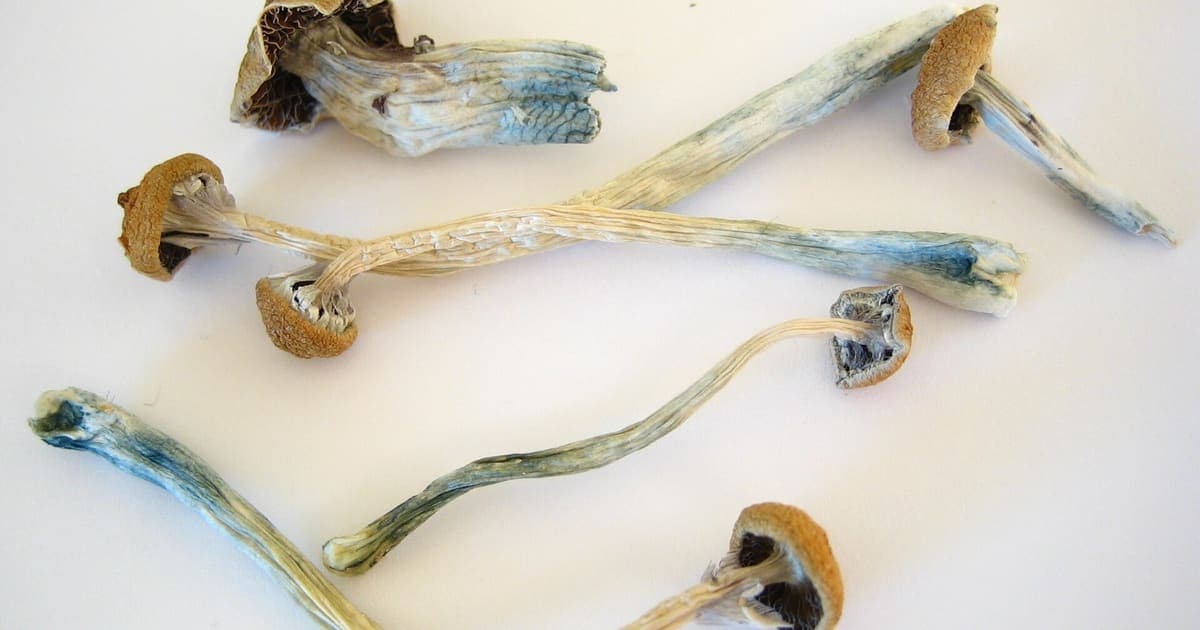
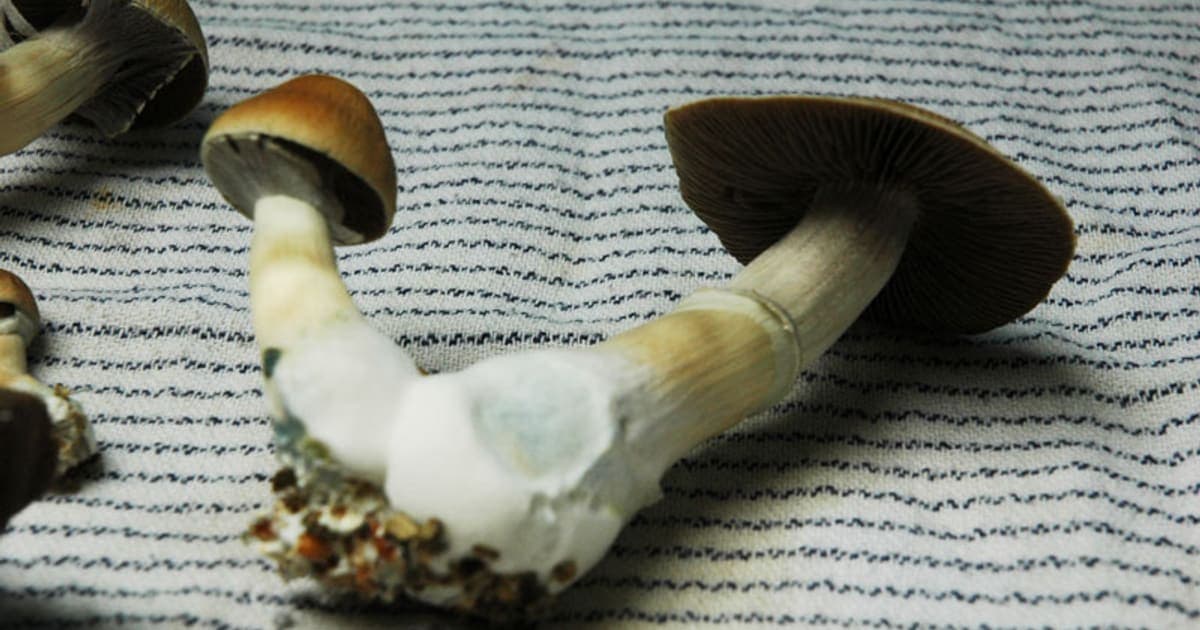
A 2025 open-access review in Pharmaceuticals (PMC) identified four environmental factors that degrade psilocybin and psilocin: heat, light, oxygen, and moisture. Freezing fresh truffles addresses heat but actively worsens the moisture problem: ice crystals rupture cell walls, releasing both the substrates and the enzymes — particularly phosphatases — that convert psilocybin into psilocin, which is then rapidly oxidised. The blue discolouration sometimes seen on frozen-thawed truffles is a visible marker of exactly this process. (For detail on the blueing chemistry, see our explainer on why truffles bruise blue and what it means.)
Separately, a 2026 reference-material study published in the Journal of AOAC INTERNATIONAL reported that pre-freezing of Psilocybe samples reduced measured psilocybin content, which the authors flagged as a methodological concern when preparing analytical reference material — an indication that the degradation is reproducible enough to matter even under controlled laboratory conditions.
Why Ice Crystals Are the Core Problem
Psilocybin sits inside the vacuoles and cytoplasm of fungal cells. In a living truffle, it is physically separated from the phosphatase enzymes that would otherwise convert it to psilocin. When you put a fresh truffle in a household freezer, two things happen simultaneously:
Ice crystal formation — water inside cells expands roughly 9% as it freezes, puncturing membranes and cell walls. The slower the freeze, the larger the crystals and the more damage they cause. Household freezers cool slowly; laboratory cryogenic systems cool in seconds.
Enzyme release and action — the ruptured cells release phosphatases into direct contact with psilocybin. Even at sub-zero temperatures, enzymatic reactions slow but do not stop entirely. On thawing, the reaction accelerates further.
The result is a partially dephosphorylated product: psilocin. Psilocin is pharmacologically active but chemically unstable — it oxidises readily in the presence of oxygen to produce bluish quinones that have no known psychoactive effect. The net outcome is an irreversible loss of the alkaloid you were trying to preserve.
This is distinct from what happens during a controlled, very rapid freeze in liquid nitrogen, which is different from household freezing in both speed and temperature (-196 °C vs -18 to -20 °C). Liquid-nitrogen cryopreservation can preserve biological material with minimal ice-crystal damage, but it is not a practical option for home users and is outside the scope of what most storage advice covers.
Drying Beats Freezing: What the Evidence Supports
The Gotvaldová et al. stability data point clearly in one direction: drying before storage is the most effective way to preserve psilocybin content. Removing moisture achieves two goals at once — it arrests enzymatic activity by eliminating the aqueous medium those reactions require, and it reduces the oxygen exposure that degrades psilocin.
Practical drying options for home users include:
Food dehydrator at low heat (35–45 °C) — the most reliable method. The Pharmaceuticals (PMC, 2025) review notes that heat degrades psilocybin, so keeping dehydrator temperature below 50 °C is important. Running 4–8 hours until the material is cracker-dry is typical for truffle slices.
Silica gel desiccant in a sealed jar — a slower method that avoids heat entirely; effective if you have patience and enough desiccant to absorb the substantial moisture in fresh truffles (which are roughly 90% water by weight).
Air drying at room temperature — workable but slow, and leaves the material exposed to ambient light and oxygen during the process.
Once thoroughly dried, psilocybin truffles stored in an airtight, opaque container in a cool dark place retain meaningful alkaloid content for considerably longer than any fresh-frozen preparation. For specifics on expected shelf life and potency retention timelines, see our guides on how long psilocybin truffles stay potent and the comparison of fresh vs dried psilocybin.
One important nuance from the Gotvaldová data: alkaloid levels are uneven within the same truffle. Psilocybin concentration varies between the outer rind and the inner mass of the sclerotium, which means that simply sampling the surface of a batch does not give you an accurate picture of what is in your dose. This batch variability exists before any storage decision is made — for a deeper look at why this matters, see why truffle potency is uneven within a pack.
Practical Harm-Reduction Guidance
Storage method directly affects dose reliability, which directly affects harm reduction. A truffle that has lost an unknown fraction of its psilocybin to enzymatic degradation will produce an unpredictably weaker effect — or, if someone compensates by taking more, may produce an unexpectedly stronger one on a different occasion. Neither outcome is desirable.
If you are microdosing, where precision matters most, starting with properly dried and homogenised material gives you a far more consistent baseline than fresh-frozen. For more on why within-batch variability is a challenge even before storage, see how to grind and homogenise truffles for consistent doses.
If you have any uncertainty about whether microdosing is appropriate for you given your health background or current medications, use the self-screener before proceeding. If you are in crisis, please go to crisis resources now.
Summary
Can you freeze magic truffles? Technically yes, but the research shows fresh-frozen biomass loses the large majority of psilocybin content.
Ice-crystal damage releases phosphatase enzymes that convert psilocybin to psilocin, which then oxidises to inactive byproducts.
Gotvaldová et al. (2021) found this occurred at both -20 °C and -80 °C; the Oregon Health Authority hosts the open-access full text.
The 2026 AOAC reference-material study independently found pre-freezing reduced measured psilocybin, confirming the effect is reproducible.
Drying at low heat or with silica gel before airtight dark storage preserves far more alkaloid than freezing fresh material.
Frequently asked
Can you freeze magic truffles to preserve them?+
You can, but the research advises against it. A 2021 stability study by Gotvaldová et al. found that fresh biomass frozen at -20 °C and -80 °C lost the large majority of its psilocybin content, whereas dried samples stored in the dark degraded far more slowly.
Why does freezing destroy psilocybin in truffles?+
Ice crystals rupture fungal cell walls, releasing phosphatase enzymes that convert psilocybin into psilocin. Psilocin is chemically unstable and quickly oxidises to inactive bluish compounds — the visible blueing you may see on thawed truffles. The net result is an irreversible alkaloid loss.
What is the best way to store psilocybin truffles long-term?+
Dry the truffles thoroughly — ideally in a food dehydrator at 35–45 °C — then seal them in an airtight, opaque container in a cool, dark place. Removing moisture halts the enzymatic reactions that destroy psilocybin. This method preserves far more alkaloid than freezing fresh material.
Does the blue colour after thawing mean the truffles are still potent?+
No. The blue discolouration is caused by psilocin oxidising to quinone pigments after cell walls rupture — it signals that alkaloid degradation has already occurred, not that potency is intact.
Does drying psilocybin truffles reduce their potency?+
Drying at low temperatures (below about 50 °C) has a much smaller negative effect than freezing fresh material. The 2021 Gotvaldová stability study found dried, dark-stored samples retained the most alkaloid over time compared with all other storage conditions tested.
This guide is general educational information about microdosing, not medical advice and not a recommendation to use any substance. It can't account for your personal health. If you take medication or live with a mental-health condition, speak with a qualified professional before making any decision.